

The Most Boxing-Politics Card of All Time

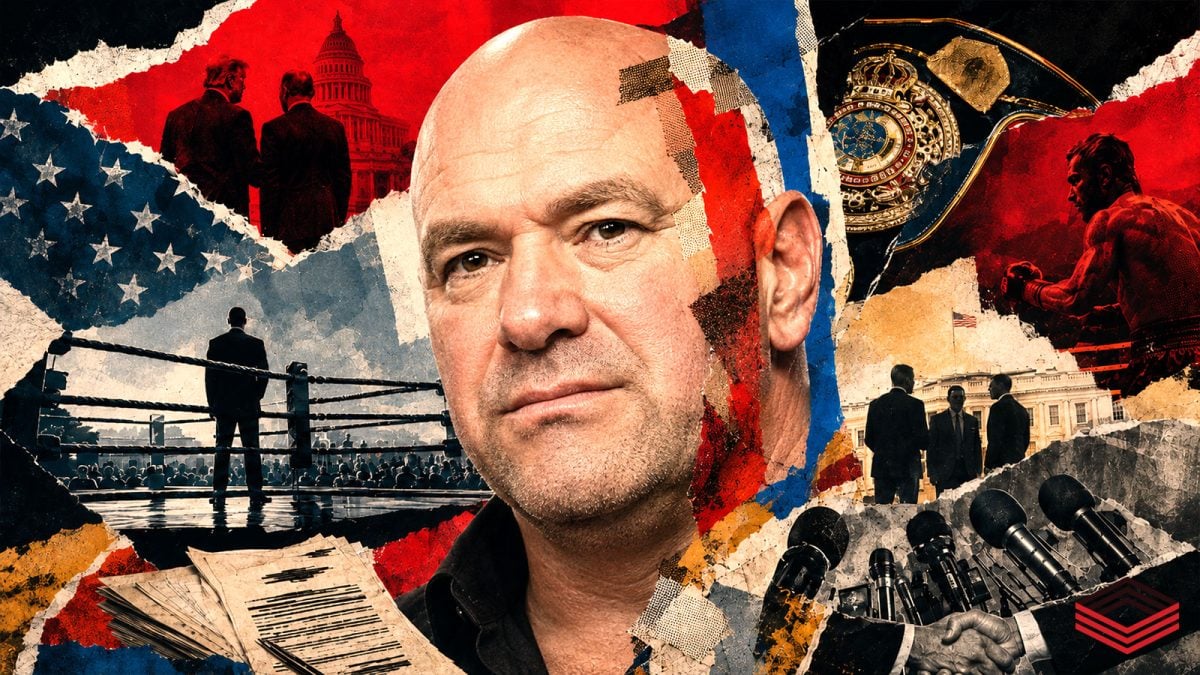
However self-serving its ambitions, Dana White’s Zuffa Boxing arrived promising a future freed from the politics, fragmentation and vested interests that have plagued the sport for generations. Yet in trying to impose order on boxing, White seems instead to have added another powerful faction to its long-running struggle for control of an already unmanageable beast.
Boxing almost seems to revel in being that beast: a political mess of warring promoters, broadcasters, feckless and fragmented governing bodies and, not least, its valiant but deeply flawed participants.
Somehow, two fights atop a Las Vegas card this September have come to encapsulate almost every strand of that landscape, bringing together competing interests, old grudges, contractual disputes and institutional contradictions in a story that is barely comprehensible from the outside, yet somehow perfectly comprehensible as boxing.
Even by the sport’s own long and storied standards of political dysfunction, it may be the most boxing-politics card ever assembled.
Ryan Garcia against Conor Benn at T-Mobile Arena on September 12 was supposed to represent something of a new watermark for White’s latest attempt to remake boxing. Instead, the event now sits under The Ring banner, with Golden Boy and Zuffa as promoters of note.
Zuffa itself grew from the partnership announced between TKO (owners of the UFC), Turki Alalshikh and Sela, the latter a company owned by Saudi Arabia’s Public Investment Fund, while TKO was handed day-to-day control of the new promotion. The Ring, meanwhile, is owned by Alalshikh.
Before a punch has been thrown, Zuffa’s supposed new order has produced something remarkably similar to the old one: rival promoters, competing broadcasters, sanctioning bodies, overlapping Saudi interests and contractual disputes all fighting for their place around the same event.
That tangled route to September 12 is less an exception than a neat illustration of what happens when a new power tries to impose itself on modern boxing.
How Garcia-Benn became everyone’s fight
The political crossover was almost unusually literal. Reports had Zuffa preparing to announce Garcia-Benn during UFC Freedom 250, its June 14 event on the White House lawn, staged with White’s longtime friend Donald Trump in attendance. That announcement never came.
Days earlier, Golden Boy had issued cease-and-desist correspondence after learning that Zuffa was attempting to negotiate a fight involving Garcia without its agreement. The company maintained that Garcia remained contractually tied to Golden Boy and that any deal made without its participation was unauthorised.
That was the problem with treating Garcia as though he were simply available to Zuffa. He operates through his own King Ryan Promotions, but Golden Boy has promoted him for most of his professional career and maintained contractual rights over his fights.
The broadcast situation was scarcely simpler. Eddie Hearn subsequently said DAZN had also sent Zuffa a cease-and-desist, citing its exclusive broadcasting rights connected to Garcia. The eventual compromise put the fight on Paramount+ in the United States while DAZN secured the UK and Ireland rights.
That outcome sits awkwardly alongside another agreement. Only months earlier, Zuffa had signed a multi-year deal making Sky Sports the UK and Irish home of its events, including a commitment to stage at least five cards a year on British soil. Benn, one of Britain’s most recognisable active fighters, appeared an obvious asset to that expansion. Instead, arguably his biggest Zuffa-associated fight will be shown by one of Sky’s principal boxing rivals.
And, should the waters require muddying any further, Saudi Arabia also has a financial interest in DAZN. PIF’s SURJ Sports Investment acquired a minority stake in the broadcaster in 2025.
Garcia’s Saudi relationship already required some untangling of its own. In February 2025, he and Devin Haney entered what The Ring described as multi-fight agreements with Riyadh Season, beginning with separate fights and ideally leading to their rematch. Garcia then lost to Rolando Romero, and that plan collapsed.
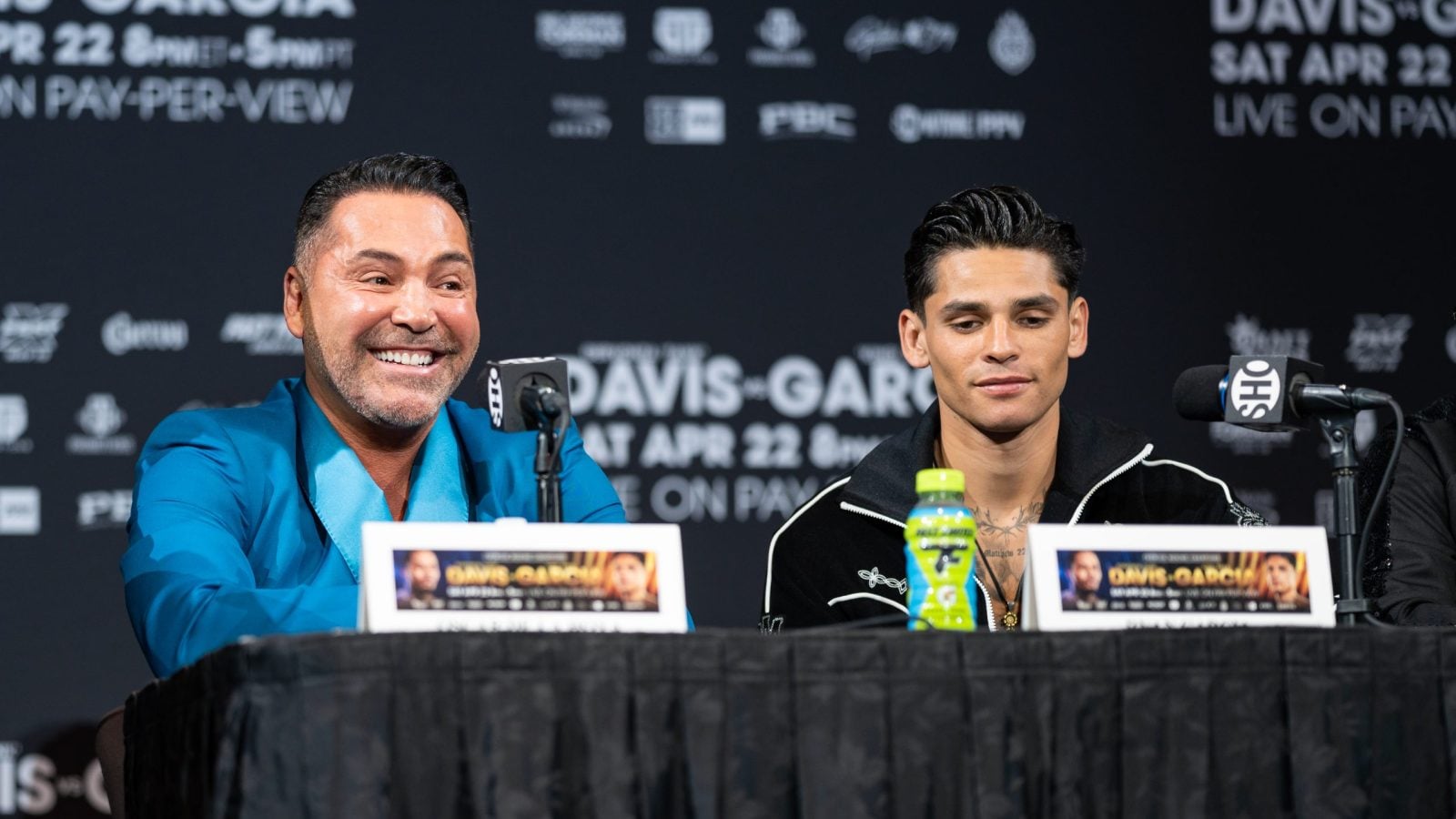
De La Hoya later described a two-fight Saudi agreement beginning with Garcia’s subsequent title fight against Mario Barrios, adding that the Saudi side had chosen Benn as the second opponent. Whether that represented a replacement agreement, an extension or some restructuring of Garcia’s earlier arrangement has never been publicly clarified.
Perhaps appropriately, even Garcia’s contractual route into the fight requires interpretation.
White meets the old guard
None of this co-promotion would be particularly striking were it not for White’s long-standing hostility towards both boxing’s traditional promotional model and De La Hoya personally.
When the new venture was announced in 2025, White made clear that collaborating with the sport’s established promoters was not his preferred model. He later described his intention as living in his “own little bubble” and doing his own thing, while making equally clear that De La Hoya and Bob Arum were not people he particularly wanted to work with.
De La Hoya has since remained one of his favourite targets. Earlier this year, White attacked him for enforcing contracts against fighters seeking opportunities elsewhere, saying: “He’s suing his fighters so they won’t leave him.”
That criticism may have struck neutral observers as somewhat rich. In February 2025, a federal judge gave final approval to a $375 million settlement in the Le v Zuffa antitrust class action involving more than 1,000 former UFC fighters. The plaintiffs had alleged that the UFC used market power and restrictive contracts to suppress fighter compensation. UFC denied wrongdoing and settled without admitting liability.
The cases are not legally equivalent, but the history is difficult to ignore when Zuffa presents itself as a more fighter-friendly alternative to boxing’s traditional promoters.
Garcia-Benn has now put White into business with one of the promoters he spent years suggesting he would rather avoid.
It is not the only old relationship Zuffa has disrupted.
Benn, Hearn and the recruitment war
Conor Benn’s route to Zuffa was contentious in its own right. He had spent his entire professional career with Matchroom and developed a close relationship with Eddie Hearn, only to leave abruptly in February after accepting a one-fight Zuffa deal widely reported to be worth $15 million. The figure was never publicly disclosed. Hearn said he learned of the decision through an email from Benn’s lawyer rather than from Benn himself.
The manner of the departure particularly stung after Matchroom had stood firmly behind Benn during the most difficult period of his career. His two adverse VADA tests for clomifene in 2022 caused the cancellation of his first scheduled fight with Chris Eubank Jr and began a lengthy battle over his ability to resume fighting in Britain. Hearn remained one of his most persistent public advocates throughout.
There was also a contractual complication. Matchroom retained matching rights, and Hearn later said there was a legal process concerning what his company had actually been given the opportunity to match. He claimed Matchroom had matched “one element” of the proposal but that a separate one-fight option had “snookered us”.
That one-fight agreement took Benn into an April 11 bout with Regis Prograis at Tottenham Hotspur Stadium. He won comfortably on the cards and, officially at least, became a promotional free agent again.
Six days later, Zuffa announced a new long-term agreement. White subsequently said Benn had signed for five fights across two-and-a-half years.
The speed with which a reported $15 million single-fight contract was followed by a substantially longer deal has inevitably added another dimension to Matchroom’s dispute over precisely what it had been asked to match.
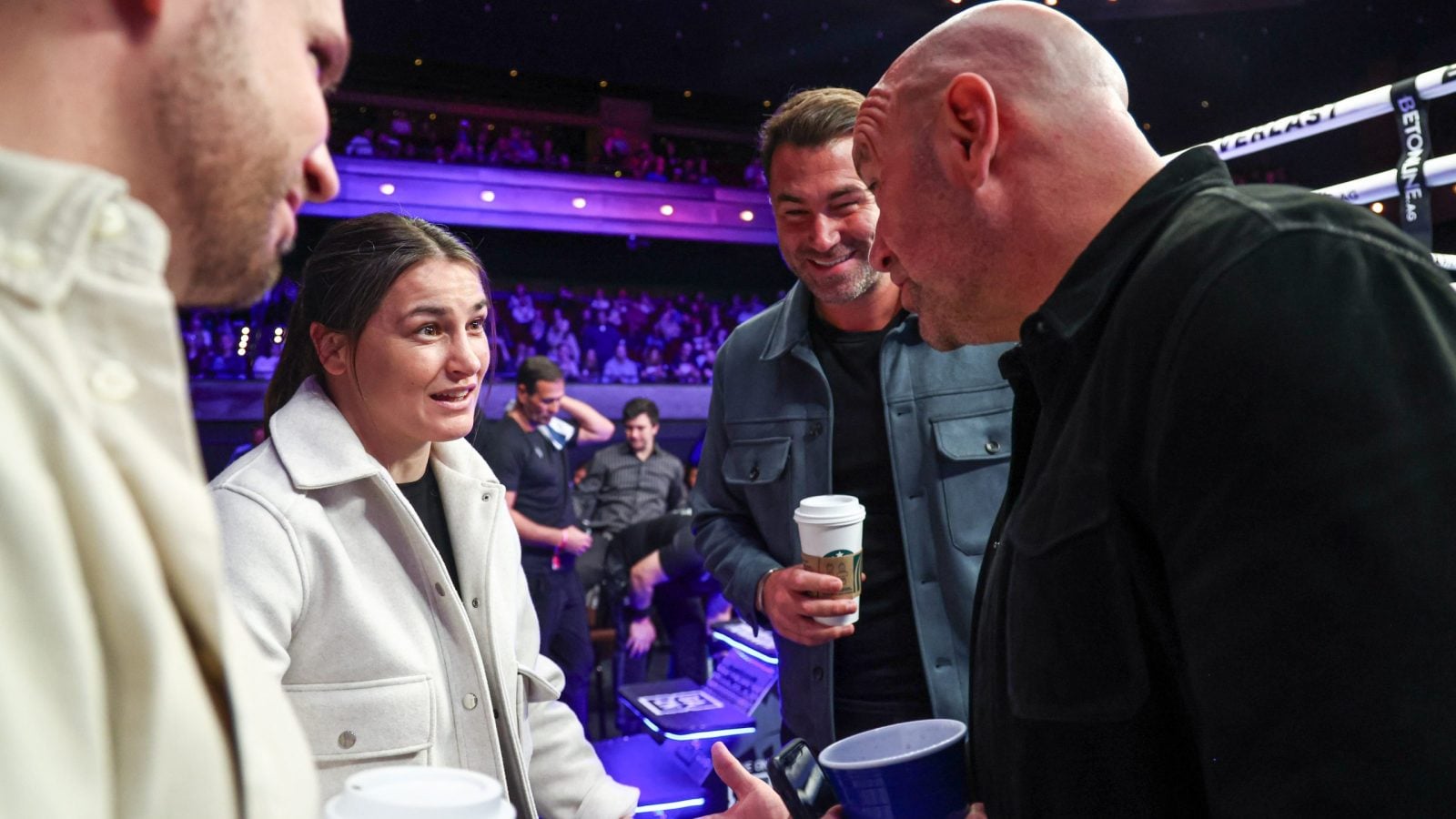
Boxing also has a habit of becoming a strangely dementing force on otherwise reasoned men, and White and Hearn increasingly seem to have been caught in it.
Once friendly and openly respectful of one another, they are now firmly at loggerheads. It has reached the point where White, 57, and Hearn, 47, two men who have made fortunes promoting other people to fight, have repeatedly entertained the prospect of fighting each other. What began with White telling Piers Morgan that “if Eddie wants to box, we can box” has since acquired a life of its own, with Hearn continuing to press the matter, however tongue-in-cheek the whole exercise ultimately remains.
The WBC problem
There is a more serious parallel between the two men in the main event.
Boxing still lacks a coherent anti-doping system, with responsibility divided between commissions, sanctioning organisations and voluntary testing programmes. Garcia, like Benn, previously returned an adverse VADA test, testing positive for ostarine around his April 2024 fight with Devin Haney. His majority-decision victory was subsequently overturned to a no contest, and he served a one-year suspension.
Yet boxing proved remarkably quick to restore the commercial standing of both men. Once Benn’s own anti-doping affair was resolved, he reportedly earned around £8 million for each of two lucrative fights with Eubank. Garcia returned from suspension and, within two fights, had captured the WBC welterweight championship.
The WBC’s own flexible approach has been central to turning Garcia-Benn into a world-title fight.
The organisation conducted its own investigation into Benn in 2023 and reinstated him to its rankings, accepting that his elevated consumption of eggs provided a reasonable explanation for the clomifene findings while making no finding of intentional ingestion. That process was separate from the subsequent British anti-doping proceedings.
Benn eventually reached No. 1 in the WBC rankings and was designated mandatory challenger despite not having fought at the 147lb limit since 2022. After spending years competing above welterweight, including two fights with Eubank at middleweight, the WBC ordered him to face the winner of Garcia-Barrios. Sulaiman has defended both Benn’s ranking and Garcia’s own route to the title picture as products of the organisation’s case-by-case approach.
In practice, that flexibility has been every bit as important in making Garcia-Benn a championship fight as the negotiations between Zuffa, Golden Boy and the fighters themselves.
That leaves Zuffa in an awkward position, because the organisation lending its main event the status of a world championship is also one White has repeatedly argued boxing would be better without.
White’s stated ambition has been to simplify boxing’s title structure and eventually recognise Zuffa’s own championship rather than depend upon the traditional sanctioning bodies. He has said explicitly that he has no interest in working with them.
Relations with the WBC have become particularly strained.
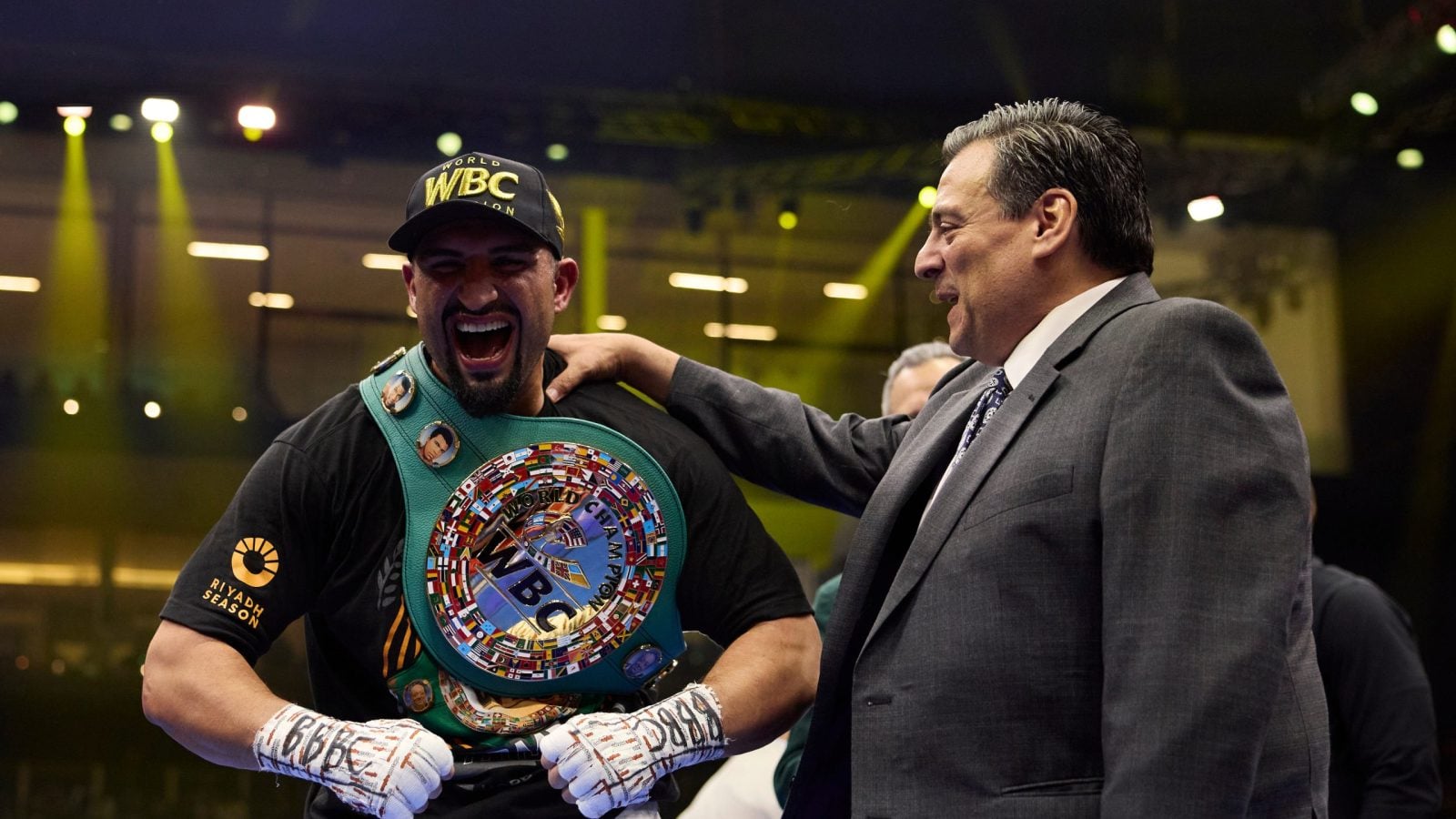
TKO’s first major promotional role in this new era came not through one of Zuffa’s regular cards, but in Alalshikh’s Canelo Alvarez-Terence Crawford superfight. Crawford became undisputed super-middleweight champion, only for the WBC to strip him months later following a dispute over $300,000 in sanctioning fees. White sided firmly against the organisation and subsequently launched a particularly savage attack on WBC president Mauricio Sulaiman.
TKO president Nick Khan took the criticism into considerably more formal surroundings when he appeared before the US Senate in April while lobbying for changes to the Muhammad Ali Act. Khan described the sanctioning bodies’ model as “charging boxers money for the right to be called champions” and told senators that the WBC recognised 163 champions across 18 weight divisions.
It was an expansive use of the word champion. The figure swept the WBC’s wider collection of regional, secondary and youth titleholders into the same rhetorical count as its primary world champions. Even so, with four major sanctioning organisations capable of recognising different champions in the same weight class, the underlying criticism hardly required much embellishment.
The proposed legislation is central to Zuffa’s wider plan. The House version of the Muhammad Ali American Boxing Revival Act would allow Unified Boxing Organisations to contract fighters, promote fights and establish their own rankings and titles. Under existing federal law, those functions are intended to remain separated between promoters, managers and sanctioning organisations. A bipartisan Senate version was introduced on July 30 and would similarly establish a framework for voluntary league-style organisations operating alongside traditional boxing.
For now, however, Garcia-Benn requires Zuffa to operate inside the very system it hopes to replace.
The WBC has confirmed that Garcia’s championship will be at stake, and Sulaiman has already objected to early promotional material that failed to prominently identify the organisation or its belt. “If a promotion is not putting WBC letters, WBC logo, WBC belt, that’s a problem,” he said.
With the fight still weeks away, that uneasy accommodation remains an obvious potential flashpoint.
Washington and the new boxing order
Zuffa’s preferred regulatory model also arrives with an unavoidable political backdrop.
White has been one of Trump’s most visible sporting allies for years, while Trump has repeatedly attended UFC events and hosted the promotion on the White House lawn this summer.
The legislation itself has another Trump connection. Republican Congressman Brian Jack, one of the principal sponsors of the House bill alongside Democrat Sharice Davids, previously served as Trump’s White House political director and later as a senior congressional liaison. The bill nevertheless passed the House with broad bipartisan support, while the Senate proposal is itself sponsored by Republican Ted Cruz and Democrat Jacky Rosen.
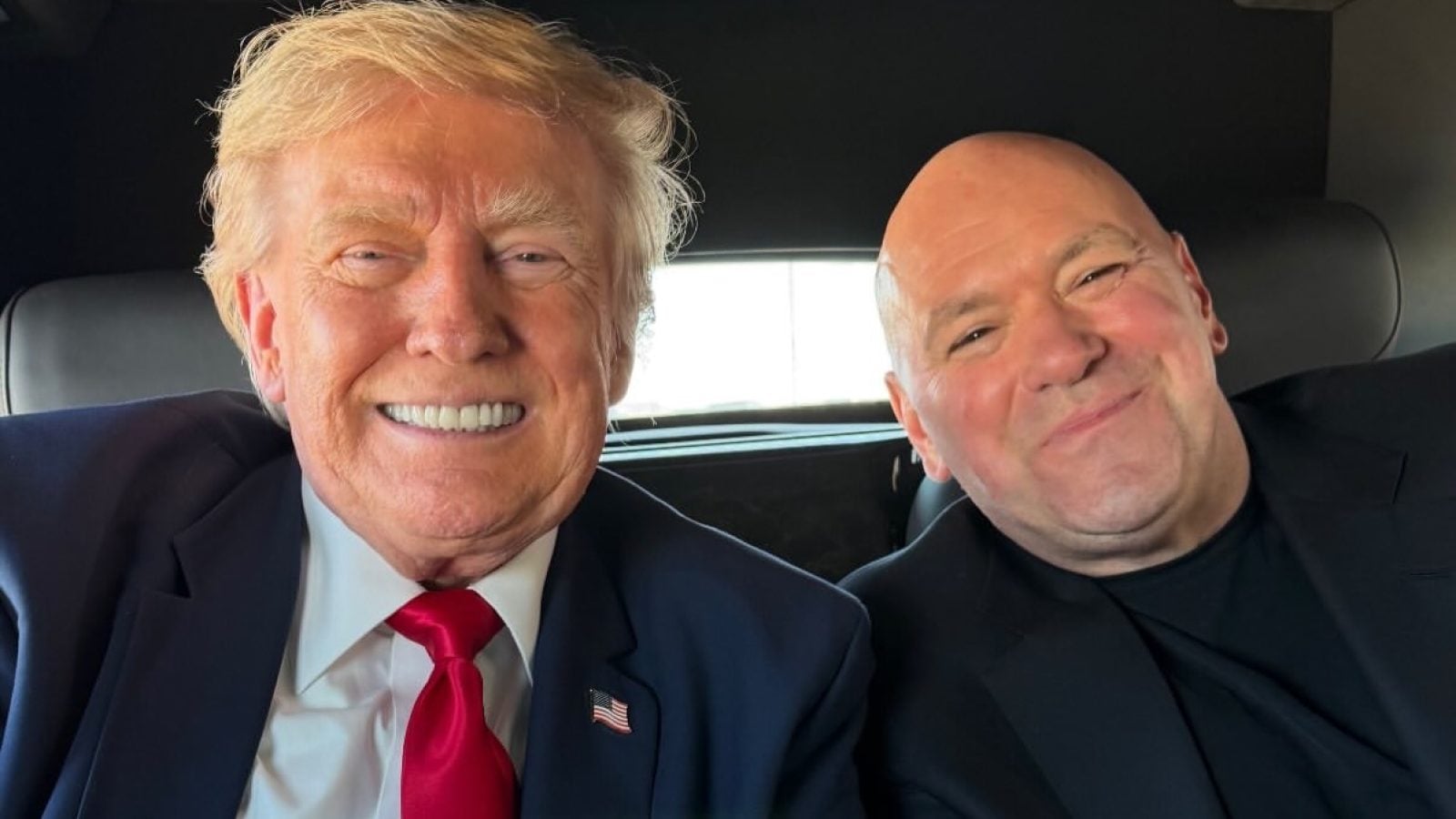
None of that demonstrates improper political favour, and supporters argue that the reforms would modernise boxing, increase competition and strengthen fighter protections.
But the optics are difficult to ignore. A company seeking changes to federal law that would make its preferred boxing model possible enjoys unusually close access to a president personally allied with its most visible executive. That proximity is likely to remain part of the debate over whether the reforms modernise boxing or simply shift considerably more power towards organisations such as TKO.
If the Main Event Was Complicated…
If the construction of Garcia-Benn was complicated, its co-feature, Jai Opetaia against Noel Mikaelian, enters the conversation carrying an equally remarkable assortment of baggage, this time centred on fighter management and the battle over who gets to call someone a world champion.
Opetaia was Zuffa’s first genuinely established elite signing when he joined in January as the unbeaten IBF and Ring cruiserweight champion. His frustration was straightforward: after repeated failed attempts to secure unifications, becoming undisputed remained his overriding ambition, and he believed Zuffa could deliver the fights that had eluded him.
For anyone who questioned the wisdom of pursuing that particular dream with a promoter whose stated philosophy was to dispense with boxing’s sanctioning bodies and replace their championships with its own, it did not take long for the rubber to meet the road.
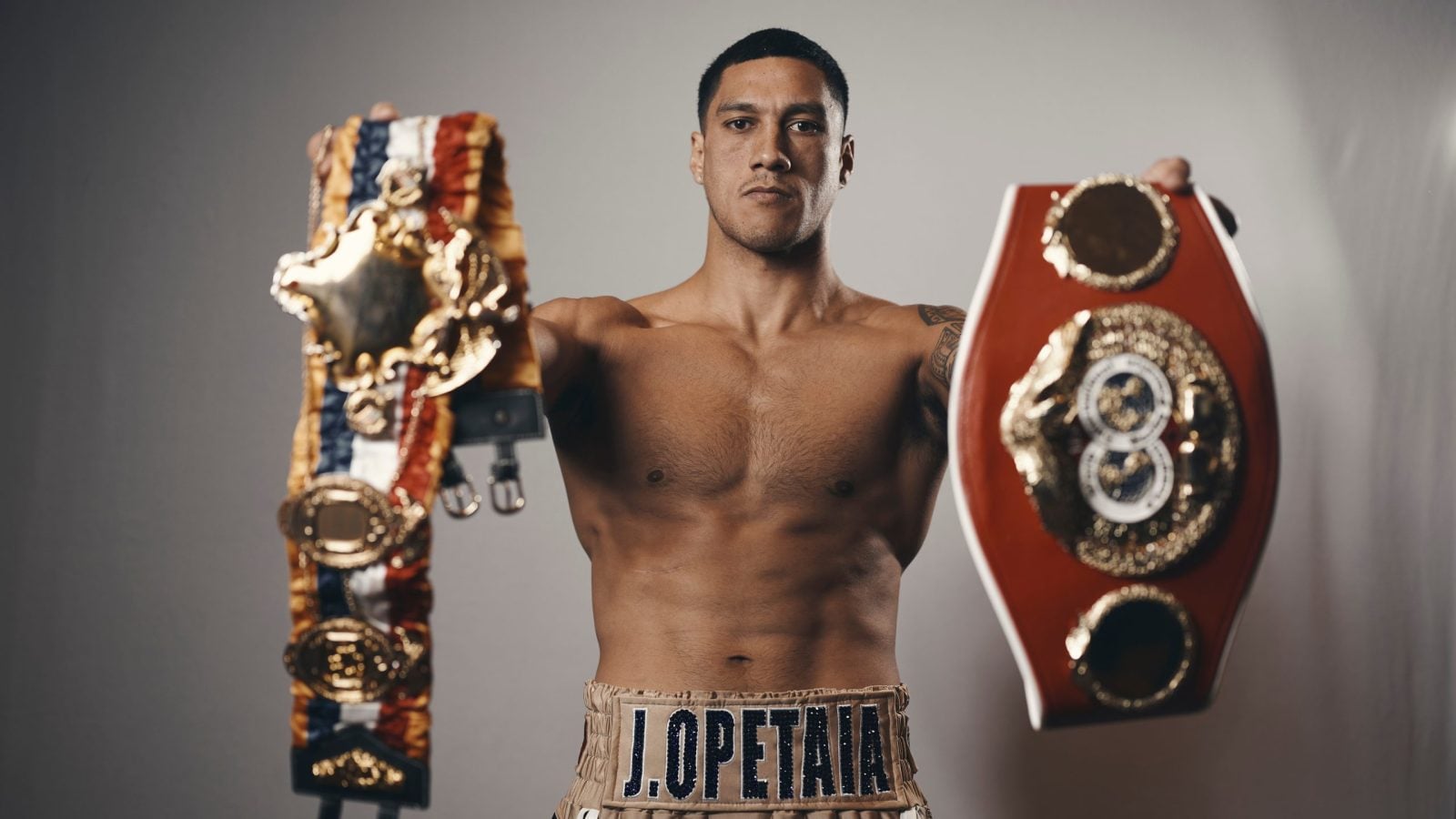
Opetaia’s first Zuffa fight came against IBF No. 15 Brandon Glanton on March 8. The IBF initially objected once it became clear that Zuffa intended to award its own championship, before eventually sanctioning the bout after receiving assurances that it would not be presented as a unification and that the Zuffa belt would amount to a “trophy or token of recognition”.
The compromise lasted barely a day.
At the final press conference, Zuffa formally presented the contest as being for its inaugural World Cruiserweight Championship. The IBF withdrew its sanction less than 48 hours before the fight, maintaining that the basis on which it had approved the bout had been breached. Under its rules, Opetaia proceeding with an unsanctioned cruiserweight contest left his IBF championship liable to become vacant.
Opetaia fought anyway, comfortably beating Glanton to become Zuffa’s first cruiserweight champion while retaining his Ring title. Eleven days later, the IBF board voted to remove him as champion.
In one of boxing’s more immediate pieces of cause and effect, a fighter who joined Zuffa determined to collect all four recognised world championships had lost one of them in his very first appearance, largely because his new promoter insisted on awarding him a fifth.
The dispute has since moved to federal court. Opetaia sued the IBF in Nevada in July, seeking reinstatement and alleging that he was stripped as part of a wider effort to punish fighters for joining Zuffa. The IBF maintains that it simply enforced its rules after the assurances underpinning its sanction were contradicted.
Zuffa had, at least, been signalling that it understood Opetaia’s original ambition. WBC champion Noel Mikaelian had already been brought into his orbit, with the pair facing off at an early Zuffa event as talk of a unification grew.
Then Mikaelian’s own politics entered the picture.
Don King, Mikaelian and the old world
Mikaelian had taken an unusually circuitous route to possessing the WBC championship.
After a disputed 2018 defeat to Mairis Briedis, he rebuilt himself into the WBC’s mandatory picture before signing a promotional agreement with Don King in 2022.
At first glance, aligning himself with King, already deep into his 90s and a vastly diminished force compared with the promoter who once dominated heavyweight boxing, looked like a peculiar bet on the sport’s past. Mikaelian’s explanation is more practical: King controlled then-WBC champion Ilunga Makabu, and Mikaelian says he was advised that signing with King was effectively his route to a title shot.
Eventually, it worked.
A planned Makabu fight disappeared, Makabu instead lost the championship to Badou Jack, and Mikaelian finally stopped Makabu for the vacant belt in November 2023.
What followed was another long period of frustration. Mikaelian remained inactive, became embroiled in a dispute with King and was eventually moved into “champion in recess” status by the WBC as Jack returned to the title picture. Mikaelian lost a close majority decision to Jack in May 2025, then won their December rematch to reclaim the belt.
There is some irony in where his relationship with King has now arrived.
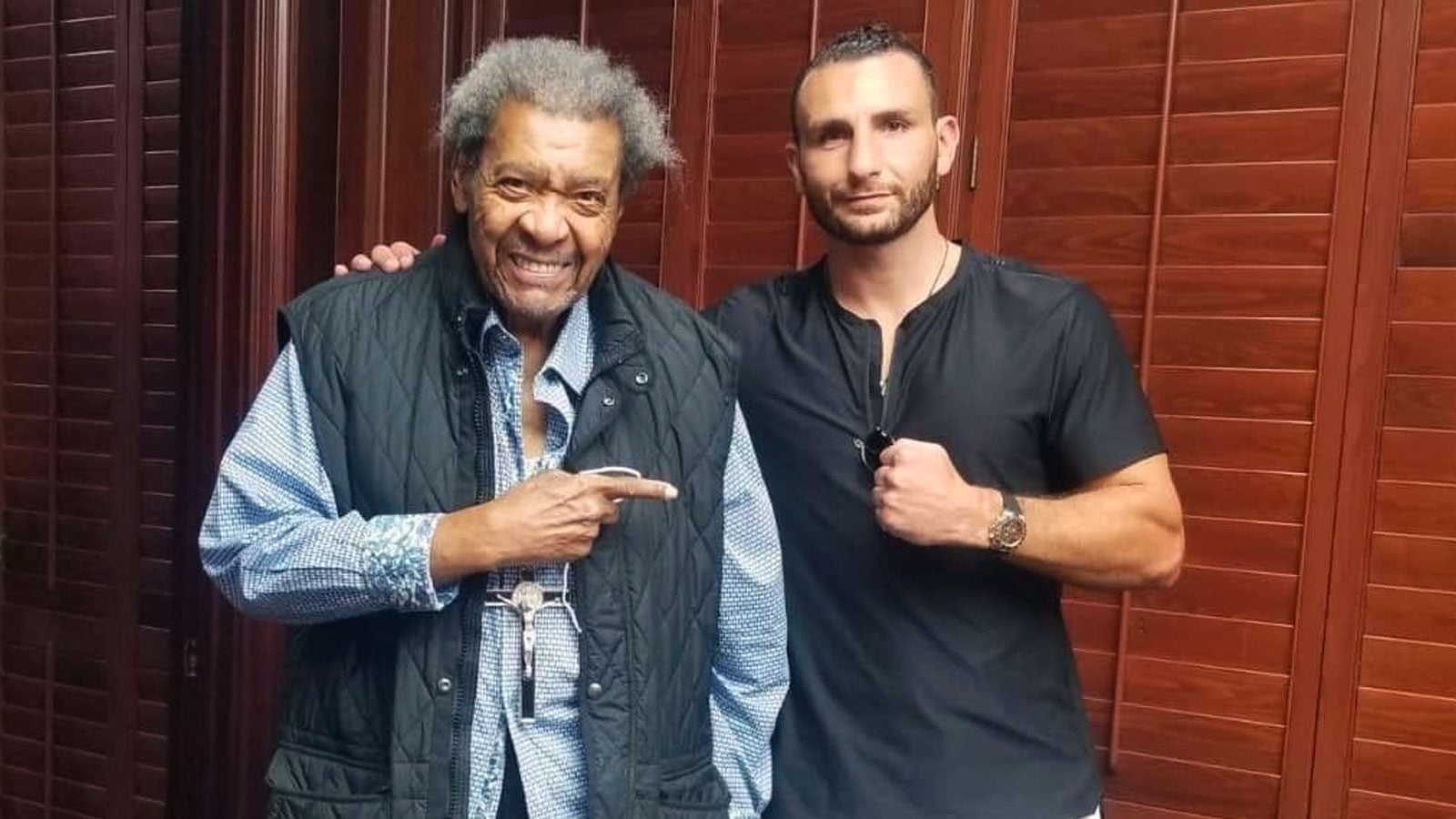
The original Muhammad Ali Act was enacted in part to protect boxers from coercive and exploitative business practices and to increase financial transparency between fighters and promoters. Mikaelian now alleges that King failed to show him the details of potential fight offers, instead telling him only what he personally stood to receive.
He argues that this breached protections contained in the same law Zuffa is lobbying Congress to amend. Those allegations have not been adjudicated.
After looking set to face Opetaia, the situation became still more complicated when the WBC ordered Mikaelian to face David Benavidez, who had moved to cruiserweight and captured the WBA and WBO titles.
Promoters Don King and Sampson Lewkowicz reached terms for a prospective Benavidez-Mikaelian unification, but Mikaelian’s side says he never received or accepted a genuine offer for the fight and could no longer wait for his career to move forward. His new representation instead returned to the Opetaia opportunity.
King’s side maintains that an agreement was reached at promoter level, and reports have raised the prospect of legal action over Mikaelian proceeding with Opetaia instead.
Then there is the WBC championship itself.
As of August 11, Mikaelian has not formally been stripped, but Sulaiman has made clear that proceeding with another fight instead of the ordered Benavidez defence would put his status in jeopardy. Benavidez has consequently been linked with interim champion Michal Cieslak if the title becomes vacant.
Cieslak’s own interim championship hardly provides a tidier ending. He was originally scheduled to face Yamil Peralta before the WBC instead approved 42-year-old Jean Pascal as a replacement, despite Pascal not appearing anywhere in its top 40 rankings that month. Cieslak stopped him in four rounds to collect the interim belt.
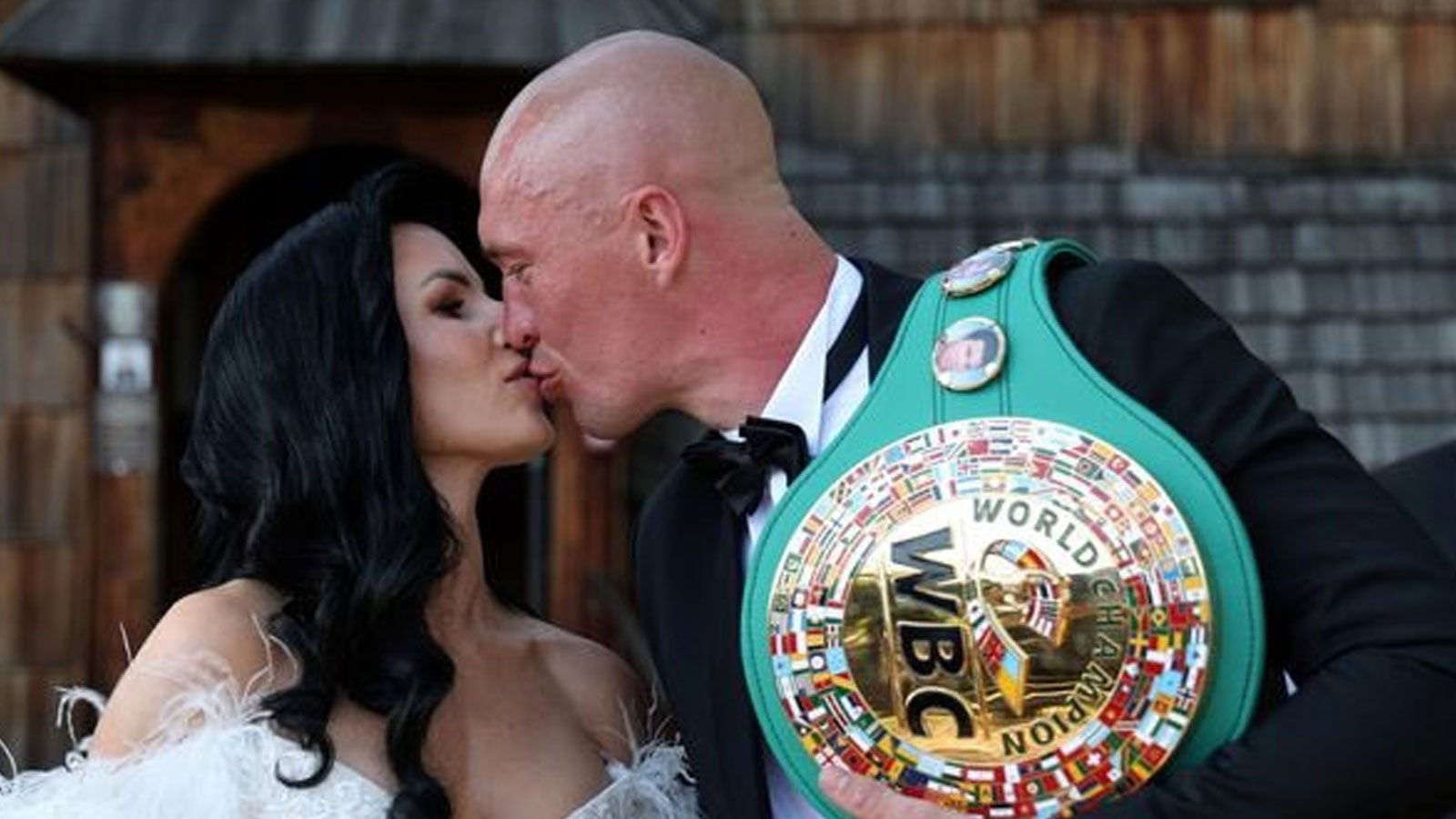
If nothing else, he appears rather more comfortable with boxing’s traditional sanctioning-body order. Shortly afterwards, he was pictured during his wedding celebrations proudly wearing the green interim belt — an almost too-perfect visual counterpoint to Zuffa’s determination to make such titles obsolete.
For all its growing conflict with Zuffa, the WBC has somehow become both architect and potential wrecking ball of the same card: helping create its main event while threatening to dismantle the co-feature.
Where Zuffa ends and The Ring begins
Perhaps the biggest unresolved contradiction is where one Saudi-backed boxing project now ends, and the other begins.
There was, initially, at least some logic to having Zuffa and The Ring operating simultaneously.
The original TKO-Sela announcement described a promotion catering to both leading fighters and prospects, with a structured development system including combines, academies and access to the UFC Performance Institute. Later, White articulated something even more distinct: Zuffa would build fighters through competitive matchmaking before the best “graduate” to Alalshikh’s larger Ring and Riyadh Season events.
It was a reasonably coherent division.
Zuffa could create the regular schedule, contracted roster and UFC-style ecosystem White wanted without The Ring needing to become a conventional promoter with an exclusive stable. Alalshikh could continue assembling marquee events from across boxing’s existing boundaries, using Saudi money to bring together fighters who might otherwise remain divided by promoters and broadcasters.
Less than a year into Zuffa’s operation, however, that distinction has become remarkably difficult to see.
Rather than simply developing its own prospects, Zuffa has moved aggressively for ready-made stars. It signed Opetaia while he was already a Ring and IBF champion, paid heavily to recruit Benn from Matchroom and has since added Shakur Stevenson, a four-division world champion and established pound-for-pound fighter.
Those are fighters already capable of occupying the marquee events they were theoretically supposed to graduate towards.
Garcia-Benn now sits under The Ring banner while Zuffa and Golden Boy share promotional responsibility. Opetaia, already The Ring’s champion when Zuffa signed him, appears underneath it.
What was supposed to resemble a pathway from one level to another increasingly looks like two overlapping operations occupying much the same space. Zuffa is recruiting fighters already capable of headlining Ring events rather than developing prospects until they are ready to graduate onto them, while the promotional identities of the two ventures have become increasingly difficult to separate.
Why that original division of labour has blurred so quickly is harder to establish.
Zuffa may simply have discovered that assembling enough desirable fighters for a largely self-contained ecosystem is considerably more difficult than announcing one, particularly when asking independent boxers to embrace a centralised model carrying some of the UFC’s historical baggage over contracts and fighter pay.
There may also have been a simpler problem of ambition. White, Nick Khan and TKO did not enter boxing with the demeanour of people content to operate a development league beneath somebody else’s marquee events. The original launch language itself promised a platform for leading fighters as well as prospects, suggesting that the boundary was never as firm internally as White’s later “graduation” model made it sound.
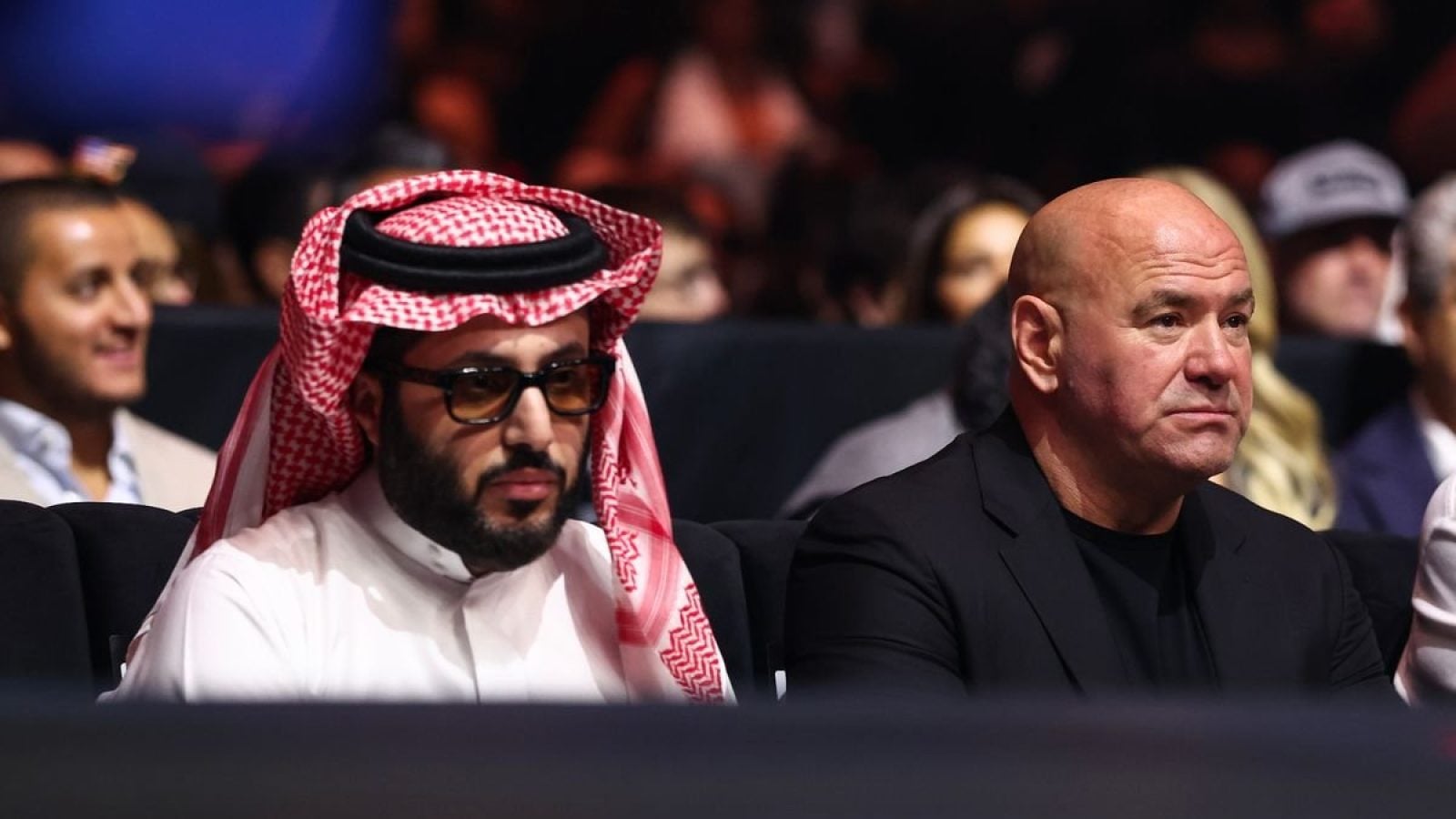
Whatever the causes, the response is visible enough.
Zuffa has increasingly chased established champions and recognisable names to lend immediate legitimacy to the venture, paying premiums to acquire fighters such as Benn rather than waiting to manufacture stars of its own.
In doing so, it has rapidly evolved towards something much more familiar: another powerful promoter competing for a finite pool of fighters, paying heavily to secure them and then discovering that making the biggest fights still requires negotiations with rival promoters, broadcasters and sanctioning bodies.
In trying to escape boxing’s political economy, Zuffa has instead become entangled in it.
White’s fascination with boxing long predates this version of Zuffa. He began around the sport as a trainer, clearly reveres much of its history and tradition, yet has spent years arguing that those traditions need to be broken apart and rebuilt.
He entered with the confidence of someone who had already helped turn the UFC into the dominant force in mixed martial arts, seemingly convinced that boxing’s pieces might fall into line once somebody sufficiently powerful and competent started moving them.
That may also have been the miscalculation.
White remains one of the sharpest operators in combat sports, but boxing was never simply waiting for its saviour. A century of competing promoters, broadcasters, sanctioning bodies, managers, contracts, personal rivalries and vested interests was never going to be steamrolled by the force of one new entrant’s personality, however well-financed or connected.
To an outside observer, much of this story may now be almost impossible to follow.
To anyone who has spent long enough around boxing, very little of it is especially surprising. Perhaps the stranger thing is how quickly you become desensitised to a sport in which almost every major fight arrives carrying its own separate political history.
None of it really makes sense.
And yet, taken together, it might make perfect sense as boxing.








Give us your thoughts on The Most Boxing-Politics Card of All Time
Please login to comment
log in