

When Britain Stayed Up For America: The 6 Times UK Boxing Moved For US TV

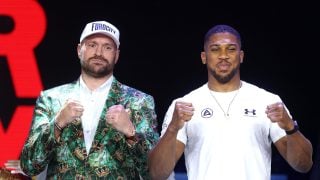
Tyson Fury vs Anthony Joshua at Wembley Stadium remains the dream British boxing setting. The complication is the clock.
Turki Alalshikh has said he would like the long-awaited heavyweight fight to take place at Wembley, but only if UK authorities allow it to be staged later than usual. Sky Sports reported that Alalshikh wants the fight timed for a American audience and intends to speak to London Mayor Sir Sadiq Khan about permission for a late-night event in the capital. Given major UK boxing main events usually take place somewhere between 10pm and 11pm, the implication is obvious: Fury and Joshua may need to walk to the ring after midnight if Wembley is to satisfy the demands of the international broadcast market.
That would be unusual for Wembley, and it would revive a practice British boxing has not really seen for nearly 17 years.
For a period from the early 1990s to the end of the 2000s, British boxing sometimes operated on America’s clock. HBO and Showtime wanted live fights in US primetime. Promoters wanted the money, exposure and prestige that came with those platforms. British fans, as a result, were sometimes asked to wait until 1am or 2am to watch the main event.
If Fury vs Joshua does become another late-night British stadium fight, it would revive one of the more unusual trade-offs in the sport’s modern history: British fans in the arena, American television setting the hour.
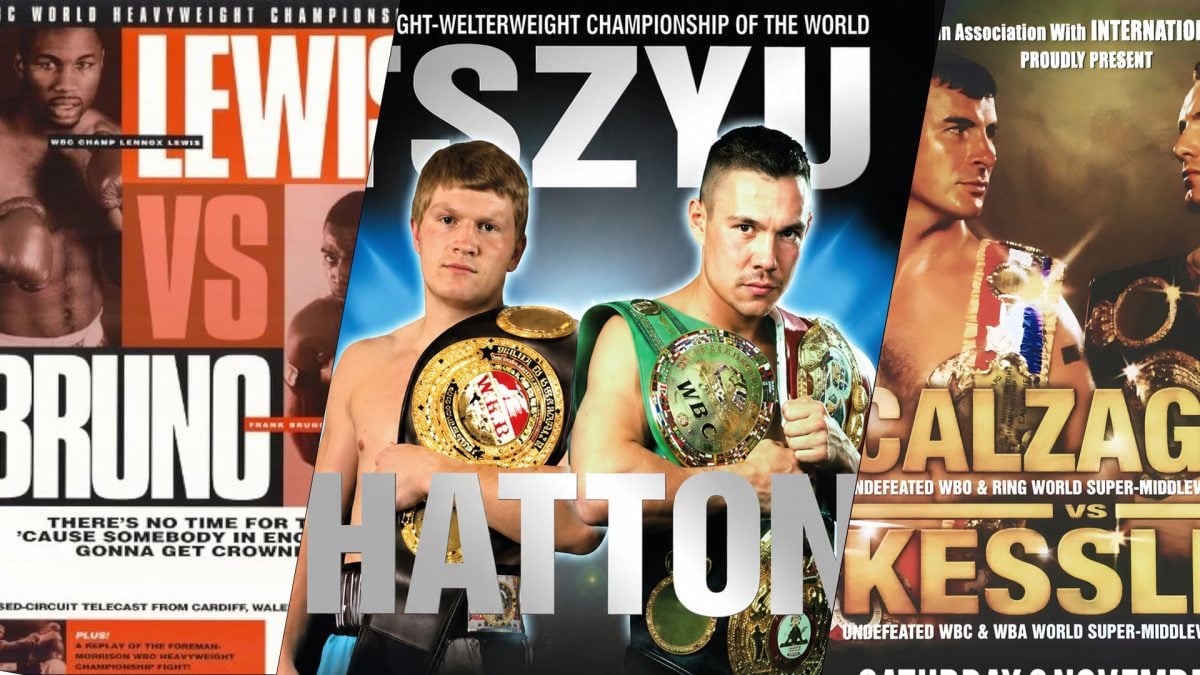
1. Lennox Lewis vs Frank Bruno, Cardiff, 1993
- Date: 1 October 1993, with the main event starting in the early hours of the following morning UK time
- Venue: National Stadium, Cardiff Arms Park, Cardiff, Wales
- Approximate start time: 1am local time
- Result: Lennox Lewis beat Frank Bruno by seventh-round TKO
The first great modern example came with a heavyweight title fight loaded with British significance.
Lennox Lewis defended the WBC heavyweight title against Frank Bruno at the National Stadium, Cardiff Arms Park. It was the first time two British-born fighters had met for a world heavyweight title, with Lewis making the second defence of his belt and Bruno trying, again, to become heavyweight champion of the world.
The timing was no accident. BoxRec’s fight notes, citing Sports Illustrated, state that the 1am start was agreed so HBO could televise the fight live in US primetime. It meant a crowd of 25,784 watched one of the biggest all-British heavyweight fights ever staged in the middle of the night, outdoors, in Cardiff.
The fight itself was far more competitive than the ending suggests. Bruno had success early, built momentum behind his jab and was still in the fight on the cards after six rounds. Lewis then hurt him with a left hook in the seventh and forced the stoppage with a heavy follow-up attack.
For British boxing history, Lewis-Bruno matters beyond the clock. It was a domestic heavyweight rivalry, a world title fight and a cultural flashpoint, with Bruno still one of the most beloved fighters in the country and Lewis still fighting for full acceptance with sections of the British public. But it also set a lasting precedent: if the fight was big enough, British boxing would move deep into the night for American television.
2. Ricky Hatton vs Kostya Tszyu, Manchester, 2005
- Date: 4 June 2005, with the main event in the early hours of 5 June UK time
- Venue: M.E.N. Arena, Manchester, England
- Approximate start time: 2am local time
- Result: Ricky Hatton beat Kostya Tszyu by 11th-round corner retirement
Ricky Hatton’s defining night came at an hour more suited to a nightclub than a world title fight.
Hatton challenged Kostya Tszyu for the IBF and Ring light-welterweight titles at the M.E.N. Arena in Manchester. The bout was carried by Sky Sports in the UK and Showtime in the United States, with the late scheduling designed to place the fight in American primetime.
The inconvenience became part of the mythology. Tszyu was not just a champion, but one of the best fighters in the sport. Hatton was unbeaten, ferocious and adored in Manchester, but still largely unproven at the very highest level.
The result made Hatton a world champion, a global attraction and one of Britain’s most bankable fighters. Tszyu failed to come out for the final round, giving Hatton the greatest victory of his career and one of the great modern British boxing upsets.
The 2am start was quickly folded into the legend of the night: a Manchester crowd that stayed awake for America, then erupted when Hatton broke one of the era’s great champions.
3. Joe Calzaghe vs Jeff Lacy, Manchester, 2006
- Date: 4 March 2006, with the main event in the early hours of 5 March UK time
- Venue: M.E.N. Arena, Manchester, England
- Approximate start time: 2am local time
- Result: Joe Calzaghe beat Jeff Lacy by unanimous decision
Joe Calzaghe had waited years for a fight that would force America to take him seriously. When it finally came, it arrived at 2am.
Calzaghe faced Jeff Lacy at the M.E.N. Arena in Manchester in a WBO, IBF and Ring super-middleweight title fight. The bout topped a Frank Warren Sports Network show, was live on ITV in the UK and aired on Showtime in the United States.
The timing was built around the American broadcast. The fight was staged at 2am local time in Manchester, allowing Showtime to carry it live in the US.
Lacy arrived unbeaten, heavily hyped and widely seen in the US as the new force at 168lbs. Calzaghe, despite years as WBO champion, was still fighting for broader recognition. He did not just win. He took Lacy apart.
The scorecards told the story: 119-105, 119-107 and 119-107, all for Calzaghe. Lacy was knocked down for the first time in his career in the 12th round, while Calzaghe produced the most complete performance of his career.
For British boxing, Calzaghe-Lacy is one of the clearest examples of the trade-off working. The crowd had to wait until the early hours, but the fight gave Calzaghe the American validation he had been denied for much of his reign.
4. Joe Calzaghe vs Mikkel Kessler, Cardiff, 2007
- Date: 3 November 2007, with the main event in the early hours of 4 November UK time
- Venue: Millennium Stadium, Cardiff, Wales
- Approximate start time: 1am local time
- Result: Joe Calzaghe beat Mikkel Kessler by unanimous decision
Calzaghe had already taken a fight to the Millennium Stadium earlier in 2007, stopping Peter Manfredo Jr in a more conventional UK broadcast slot. His return to Cardiff was a very different proposition: a genuine elite-level unification fight, staged in front of a huge Welsh crowd, but pushed deep into the night.
On November 3, 2007, Calzaghe faced Mikkel Kessler at the Millennium Stadium in Cardiff, now the Principality Stadium. With the Ring, WBO, WBA and WBC super-middleweight titles on the line, Calzaghe won by unanimous decision on scorecards of 116-112, 116-112 and 117-111.
The fight went ahead at 1am on Sunday morning. BoxingScene reported before the event that the Calzaghe-Kessler clash would start at that time, with Frank Warren arguing that the magnitude of the fight would still bring fans out regardless of the hour.
This one needs a little nuance. Some contemporary reporting framed the 1am slot as being dictated by HBO, but Warren disputed that wording. The safer description is that the fight landed in a 1am UK slot that allowed HBO to carry it live in American primetime, rather than a normal UK Saturday-night main-event window.
Either way, the outcome was the same for the Welsh crowd: another Calzaghe super-fight was pushed into the early hours, and another US premium network got a live primetime broadcast.
The fight itself secured Calzaghe’s status as the clear No. 1 super-middleweight in the world. Kessler was unbeaten, dangerous and a legitimate rival for divisional supremacy. Calzaghe adjusted after a competitive start, took control in the second half and left Cardiff with the defining stadium win of his career.
It was not as brutally one-sided as Lacy, but historically it may have meant even more. Calzaghe did not just beat an American hype job. He beat the other best super-middleweight in the world, at home, in a stadium, after midnight.
5. David Haye vs Enzo Maccarinelli, London, 2008
- Date: 8 March 2008, with the main event in the early hours of 9 March UK time
- Venue: The O2 Arena, London, England
- Approximate start time: Shortly after 2am local time
- Result: David Haye beat Enzo Maccarinelli by second-round TKO
By the time David Haye and Enzo Maccarinelli met at the O2 Arena, the late-night model had become familiar enough to be almost accepted, even when it still looked absurd.
Haye and Maccarinelli fought in an all-British cruiserweight unification fight. The WBA, WBC, WBO and Ring cruiserweight titles were involved, with Frank Warren’s Sports Network promoting and Showtime carrying the fight in the United States.
The main event began shortly after 2am. Boxing247’s report from the night said a sold-out crowd of 20,000 was still rocking the O2 when Haye entered with the WBA and WBC belts and collected Maccarinelli’s WBO title.
The timing was inconvenient. The fight was brief. But it was also significant. Haye was already preparing to move to heavyweight, while Maccarinelli represented the Calzaghe stable and held the WBO title. It was a rare all-British unification fight, staged in London, but timed for Showtime.
Haye ended it at 2:04 of the second round. He left cruiserweight as the recognised top fighter in the division and moved towards the heavyweight run that would eventually bring him a version of the world title.
For British fans, it was another reminder that when US television wanted a live British fight, the clock could be moved to almost any hour.
6. Carl Froch vs Andre Dirrell, Nottingham, 2009
- Date: 17 October 2009, with the main event in the early hours of 18 October UK time
- Venue: Trent FM Arena, Nottingham, England
- Approximate start time: Around 2.40am local time
- Result: Carl Froch beat Andre Dirrell by split decision
Carl Froch’s first fight in the Super Six World Boxing Classic showed a different version of the same problem.
Froch defended his WBC super-middleweight title against Andre Dirrell at the Trent FM Arena in Nottingham as part of Showtime’s ambitious Super Six tournament. It was a home defence for a British world champion, but the schedule was built around the American broadcast, leaving the Nottingham crowd waiting deep into the night.
The delay became part of the story. The Guardian later reported that Froch-Dirrell finally got under way at 2.40am, with nearly 9,000 fans still inside the arena to watch a tense and controversial opening fight in Froch’s Super Six campaign.
Froch won by split decision in a difficult, awkward and controversial fight. The scores were 115-112 and 115-112 for Froch, with the third judge scoring it 114-113 for Dirrell. That kept Froch unbeaten, retained his WBC belt and gave him two points in the Super Six.
As a TV case study, Froch-Dirrell is important because it was not a stadium blockbuster or a national event on terrestrial television. It was a world champion in his home city, attached to a US-backed tournament, and still forced into the early hours.
What it means for Fury vs Joshua
The history is clear. British boxing has repeatedly accepted brutal local start times when the US audience was considered important enough.
Lewis-Bruno did it for HBO. Hatton-Tszyu, Calzaghe-Lacy and Haye-Maccarinelli did it for Showtime. Calzaghe-Kessler landed in a 1am slot that allowed HBO to show it live in primetime, even if Warren pushed back on the idea that the network had demanded the timing. Froch-Dirrell showed that even a British world champion fighting at home could end up waiting until nearly 3am because the wider tournament was built around American television.
That does not mean Fury vs Joshua at Wembley would be simple.
Cardiff Arms Park, the M.E.N. Arena, the O2, the Millennium Stadium and Nottingham Arena all staged major late-night fights. Wembley is different. It is bigger, more exposed, more politically sensitive and more complicated for transport, residents, policing and licensing. A midnight or post-midnight main event at Wembley would not just be a boxing decision. It would become a London event-management decision.
But the sporting precedent is there. British boxing has stayed up for America before. If Fury and Joshua finally meet at Wembley after midnight, it would not be the first time UK fans have had to fight sleep before watching history.







Give us your thoughts on When Britain Stayed Up For America: The 6 Times UK Boxing Moved For US TV
Please login to comment
log in